It's been a while since I've written any blog posts... but I'm sure you can see that.
The reality is that I don't have time to blog anymore, but I do continue my journey towards perfecting the holy grail of BBQ, the beef brisket, when I'm relaxing on weekends.
Feel free to browse my posts on food, marketing and anything else.
Two 8-pound pork butts being smoked at the cottage
I get a lot of traffic on my blog from people looking for information and tips about BBQ.
For the past few years, I went from primarily being a consumer of good BBQ to learning how to smoke my own meat. But for the past few months, I have been working on pulled pork. I have learned that pulled pork is a relatively easy way to try smoking meat on your own.
Here are a few reasons why you should try making your own pulled pork:
1) Pork is inexpensive: Compared to some other types of meat like beef, pork is relatively inexpensive. If you're doing pulled pork, you want a bone-in pork putt and that is a relatively cheap cut of pork. Find a good local butcher, budget for about half a pound per person and call ahead and place an order. If you get too much, don't worry as there are always things you can do with leftovers.
2) Pulled pork is versatile: You can do lots of interesting things with pulled pork. Get some high-quality buns from a local bakery and serve with coleslaw and corn bread (I used the Dinosaur BBQ recipes for both). Or if you want to class it up a bit, get some really good tortillas or taco shells and make tacos. Use the leftovers for breakfast and wow your guests with pulled pork eggs Benedict. You can keep any leftovers around for a few days and simply reheat as needed. Pulled pork shephards pie... the possibilities are endless.
3) Pulled pork is scalable: You can easily smoke two butts at the same time as you smoke one so it's almost as easy to feed a family of 10 as it is to feed a gaggle of 40 friends.
4) Pulled pork is relatively easy: People spend years or even a lifetime testing and perfecting their BBQ/smoking techniques and that's part of what makes it so much fun. With a little knowledge and patience you can make pulled pork that blows almost anything you've had at a BBQ restaurant away. Granted, that might be because you don't live near quality BBQ, but even then, BBQ restaurants have to cater to a wide group of people who don't always show up to eat when the food is ready. The best part is that there is no shortage of great knowledge available for free on the Internet.
Here's a great video by Aaron Franklin that I used as my template for pulled pork:
Here are a few tips based on my experience so far:
You don't have to smoke it the whole way: Your meat really only absorbs the smoke flavor for the first 3 or 4 hours so really concentrate during this period of getting a good smoke onto your meat. Use cherry or apple wood if you can find them or try something else. Either way, focus your time at the start of infusing your meat with smoke flavor and then you can worry about making sure it's cooked properly later on.
Wrap it: After about 4 or 5 hours, wrap your pork butt in tin foil. I'll add some beer or something else and seal it up in tinfoil and finish it on the oven if required. Purists will argue that it's cheating but we're trying to make sure we don't waste our time/effort when we first start doing this ourselves. Plus, when you have guests coming over, you have to serve them something and so wrapping will ensure you don't screw up. I will wrap my pork butts at about 180 degrees F internal temp and leave on the smoker for a few more hours until it hits 200. I have even transferred my pork butts to the oven at 180 internal temp with the oven at 250 and let it finish that way while I go for a swim.
Trust your temps: The real science of good BBQ and smoking comes from understanding how to maintain a good grill/smoker temperature and knowing when your meat is done. The real pros can do this with their eyes, ears and noses. Not being a professional and a being bit of a gadget nerd, I have a wireless thermometer that tells me the temp of my grill and temp of my meat from as far away as 100 yards so I don't have to open the grill or poke my meat to get a good reading. You want to cook at 275 degrees F and pull it at 200 degrees F internal temp.
Let it rest: Perhaps the biggest mistake people make is not letting their meat rest and that goes for everything from steaks to chicken. Let your pork butt rest in foil for about 45 minutes after it gets to 200 internal temp. I might even add some beer or something to keep it moist as this is when the meat will suck the juices back into it and you won't end up with dry results. If you are done early, you can even wrap it in a towel and put it in a cooler to keep warm for a few hours or keep warm in an oven at about 150 degrees F.
Have fun: Play around with rubs and woods. You can start rubbing with salt and pepper and then add in some other things if you want. It's fairly easy to get different kinds of wood chips these days so try something new. Relax and try to enjoy the process of trying to make your own pulled pork. The more time to spend letting your rubs, meat and wood do the work the better your end product will be. Like the pros say "if you're lookin' - you ain't cookin'".
If you have anything add, feel free to comment... and I hope you have as much fun making pulled pork as I do.
I have always found the term Content Marketing to be confusing. Does it mean that we develop content and use the principles of marketing to spread it around? Does it mean that we use content to market products?
For the past few years, I have been seeing and hearing David Spark all over the Internet. He's been a frequent guest on The Beancast, he's been on Tech News Today, and he has been hosting his own podcast. He was really the first person I saw/heard using the term "brand journalism" and being a veteran tech journalist, he was well qualified to speak about it.
Since then, the concept of brand journalism has really started to catch on as a new way to think about marketing your brand and spreading your content through an audience of influence. Here's a recent Globe and Mail article, and here's a great piece from Forbes.
So I figured it was about time that I invited him on The Voice. David was an amazing guest and gives us a great overview of what brand journalism is and how you can harness the power of journalistic thinking to connect with customers and drive sales.
I have some great episodes coming up as well.... will be talking about digital maturity and might also be diving into the world of pharmaceutical marketing.
Neuromarketing
I really believe neuromarketing is one of the most interesting and under-discussed aspects of marketing. Many of our marketing efforts fall flat because we don't take the time to consider how the function of the human brain governs everything we do.
UX Design
Last year, I attended a full day UX design workshop by Jeff Parks and Kris Mausser on UX design and it really drove home the importance of designing experiences for people. This is a really "wide" topic but Jeff does a great job of giving you some things to think about if you want to explore this topic in more detail.
Blogger Outreach
My favorite episodes to record are ones where I have more than one guest in the studio with me. In this episode on blogger outreach I bring together a PR/Media Relations professional and a mommy blogger to discuss how you can harness the power of the blogosphere to tell your brand's story and connect with customers.
Coming Up
I am working on putting together a few episodes now that will tackle the subjects of pharmaceutical marketing and brand journalism. If you have any suggestions for topics, just let me know.
I was lucky enough to get the chance to speak with Whurley from Chaotic Moon about how marketers and communicators can take their mobile strategy to the next level. I was interested in exploring topic because I think many people simply think about apps when they think about developing a mobile strategy.
Whurley was super fun to talk to both before and after we recorded the episode and it was the first time I have ever interviewed somebody on a treadmill desk. They have done some amazing things with mobile technology at Chaotic Moon including building apps for The Daily but you have to see the Board of Awesomeness (see video above).
For over two years, I have volunteered my time with Computers for Communities (C4C). C4C is an entirely volunteer run non-profit that helps Ottawa-area people get access to technology. The most visible work that C4C does is refurbishing computers and donate them back into the community. What's different about C4C than other organizations doing similar work is that with C4C, people can earn computers through volunteering and the fact that C4C supports open-source software. I learned about C4C when I first moved back to Ottawa and was interested in volunteering for an organization that helped people in Ottawa and was involved in technology. Now, I sit on their board of directors and volunteer my time as their Partnership Director. C4C is currently looking for somebody to volunteer as Director of Communications. We have an enthusiastic team of communications volunteers but we're at the point where we need somebody to lead the team to help tell the C4C story. Here's a good idea of what would be involved:
Develop, manage and review the organization communication plan annually
Ensure all communication milestones are achieved
Work with and support the team lead of the communications team
Ensure volunteers are appropriately trained and oriented
Monitor all communications channels to ensure consistent messaging
Personally, I think that C4C has a great story to tell and we've had lots of success in the past few years... we just need somebody to help us shape and share that story as far and wide as possible so that we can take the organization to the next level. This would be a perfect opportunity for somebody who is looking to develop their communications skills and experience while helping their community. If you're interested, you can contact me and I'll be happy to help answer any questions.
After one of the busiest summers on record, I'm glad to report that I'm officially back to reality. I wouldn't recommend to anyone that you move into a new house and get married within a two-month period but I'm really looking forward to the next chapter in my life.
Guests coming soon include Terry O'Reilly and Mitch Joel... so if you're aren't subscribed, now is the perfect time! Here's The Voice podcast RSS feed.
I was listening to this episode of Marketing Over Coffee today and realized that I should probably write a post about how I often read annual reports for companies I am interested in or firms that operate in industries closely related to those of my employer into order to gather macro-level insight into where things are going and why.
Chris also mentions quarterly analyst phone calls and I often read transcripts of those as well, here's one for Motorola.
These sources of information are invaluable to anyone looking for insight about the competition, your industry or a company you could be interviewing for. I highly recommend you listen to MOC and the episode of KTC with Chris to learn more.
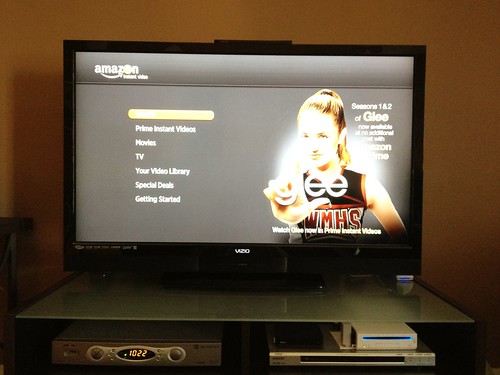
Interesting comments here on Fast Company from Roku CEO about competing Apple TV. Roku makes the Roku Box, a piece of Internet-connected hardware that will turn your TV into a Smart TV so that you can stream web content and run apps.
Roku outsells Apple TV right now in the USA but understandably, everyone is waiting for Apple to jump into Smart TV in a big way soon with the release of a Apple-branded TV set, most likely in the form of an Apple HDTV that runs iOS. It will probably be expensive but it also has the potential to set the Smart TV market on fire.
You'd think Roku was scared but they aren't and here's why: Smart TVs or Internet-connected TVs are still a relatively new product category. When you are competing in a relatively new product category, competition (especially from big brands with lots of recognition) helps raise category awareness - big time.
As the Roku CEO says, "sales doubled with Apple released the Apple TV".
Next time you're scared by the entrance of a major brand in your category, think of it as a opportunity and not a threat.